Specialty building blocks and scalable conjugation chemistry for oligonucleotide, peptide, ADC, PROTAC, radiopharmaceutical and delivery applications.
Start from the modality or conjugation strategy, then move into product categories, technical platforms, selection guidance, and project support.
Phosphoramidites, modified nucleosides, solid supports, sulfurizing reagents, cap analogs, and related synthesis tools.
GalNAc ligands, lipid conjugation handles, cholesterol derivatives, click handles, and linkers for oligo conjugation.
Selected glycopeptide-related building blocks are currently listed; other peptide modification targets are reviewed by structure, quantity, and specification.
DBCO, BCN, azides, TCO, tetrazines, NHS esters, maleimides, and other handles for mild conjugation chemistry.
Cleavable and stable linkers, hydrophilic spacers, reactive handles, and payload-linker intermediate support.
Project-specific payload and highly potent intermediate requests reviewed by exact structure, quantity, handling constraints, specification, and analytical requirements.
E3-ligase ligand derivatives, functionalized linkers, bifunctional intermediates, and other building blocks for PROTAC and proximity-inducing research.
DOTA, NOTA, DFO, DTPA, bifunctional chelators, and cold precursor building blocks for imaging and radioligand programs.
Ionizable lipid analogs, PEG lipids, helper phospholipids, cholesterol derivatives, and functional delivery lipid tools.
Fluorescent and chromogenic probes, biotinylation building blocks, dye precursors, and functional handles for labeling and detection research.
Each platform connects product families to real project questions: what handle to use, how to link it, how to analyze it, and what route risks need to be reviewed.
Linker design and functional handles for joining oligos, peptides, proteins, payloads, chelators, and lipid materials.
Copper-free click, tetrazine ligation, CuAAC-compatible handles, and labeling chemistry for sensitive biomolecule workflows.
Sugar, base, backbone, terminal, and conjugation modifications for ASO, siRNA, guide RNA, aptamer, and research or labeling oligo projects.
Unnatural amino acids, lipidation, PEGylation, glycosylated residues, stapling tools, and peptide conjugation chemistry.
Cleavable linkers, stable linkers, hydrophilic spacers, site-selective handles, and payload-linker intermediate chemistry.
CRBN and VHL ligand derivatives, ligand-linkers, bifunctional degrader intermediates, and linker-tuning building blocks.
The new site structure keeps product discovery connected to process chemistry, application context, and practical selection guides.
Fluorination, phosphorus and sulfur chemistry, flow chemistry, analytical method support, impurity profiling, and project-batch scale-up support.
Application pages by R&D problem: oligonucleotide, peptide, ADC, TPD, radiopharmaceutical, labeling, and delivery programs.
Comparison guides and selection notes that help teams compare handles, linkers, chelators, lipids, and conjugation options.
Resources are structured as comparison pages and practical selection guides for common material-selection and conjugation questions.
How to compare two common copper-free click handles by reaction rate, steric profile, lipophilicity, and project fit.
A practical comparison of azide-cyclooctyne SPAAC and tetrazine ligation for bioorthogonal conjugation.
Compare three chelator families by intended metal, complexation conditions, vector tolerance, bifunctional derivative, and analytical plan.
Define ionizable-lipid analogs through exact structure, formulation role, cargo, route, degradation hypothesis, and material controls.
Read updates on specialty building blocks, conjugation chemistry, process questions, and application-focused material selection.

The reported system uses two bioorthogonal handles. An EGFR-targeting antibody, panitumumab, is modified with trans-cyclooctene (TCO). A HER2-directed ADC, trastuzumab deruxtecan (T-DXd), is modified with tetrazine. The antibody is dosed first, followed 24 hours later by the tetrazine-bearing ADC. The two components are then covalently connected through inverse electron demand Diels-Alder (IEDDA) chemistry.
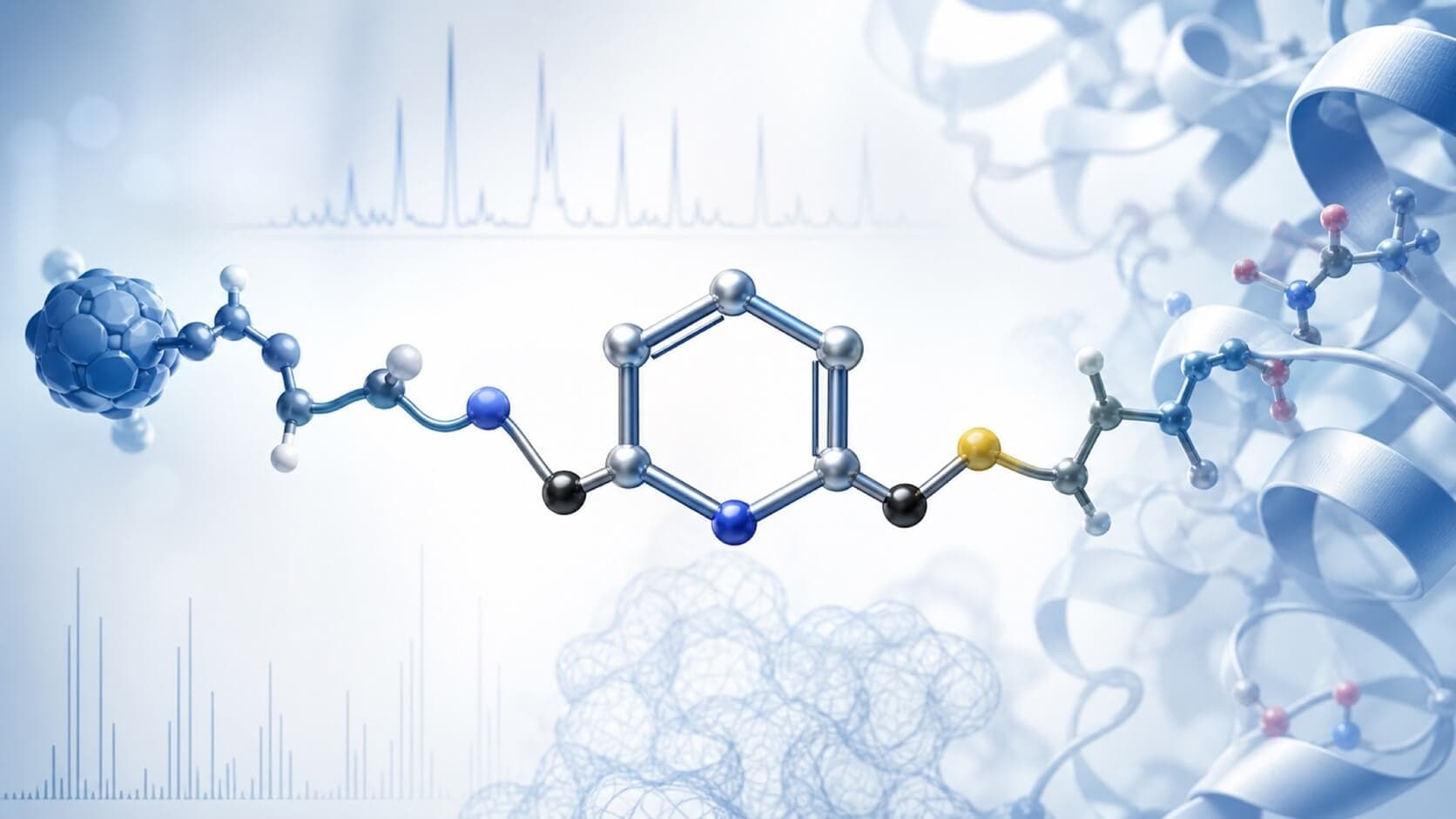
The platform uses two differentiated leaving groups on one pyridine ring. In the first operation, a primary amine replaces fluorine through nucleophilic aromatic substitution (SNAr), installing an amine-bearing linker, payload, PEG chain, or other functional unit while the thianthrenium group remains in place. In the second operation, a cysteine thiol displaces thianthrenium to create the aryl-sulfur connection.
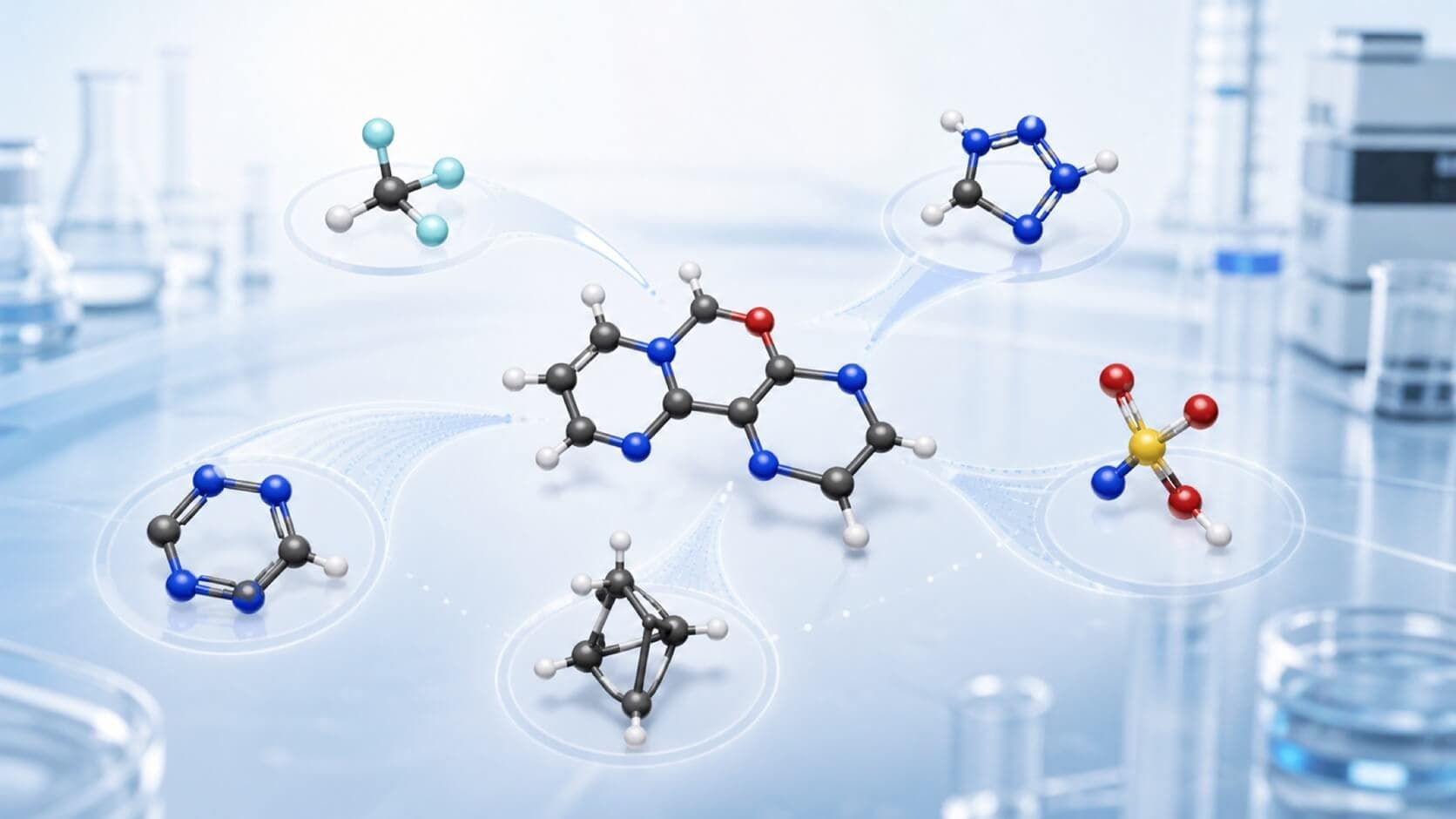
Bioisosteric replacement is most useful when a team begins with a defined liability: an oxidative soft spot, an unsuitable polarity range, a hydrolysis-prone group, an interaction that lacks selectivity, or a ring system that limits accessible chemical space. The reported survey organizes possible responses into single-atom edits, functional-group replacements, aromatic-ring changes, and saturated or bicyclic scaffolds.
CHEMOS can connect catalog search, product fit, route questions, analytical expectations, and project-specific supply planning.
Share a structure, CAS number, target quantity, or product question and CHEMOS will review the practical inquiry path.
Share a catalog number, CAS number, product name, structure, target quantity, and desired specification.
CHEMOS will review product availability, target-material fit, route questions, and batch-specific documentation needs.
