
Maleimide
Maleimide / pyrrole-2,5-dione
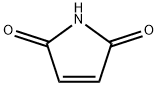
Product summary
Quick view
- Product family
- ADC Linkers & Conjugation Reagents
- Chemical Name
- Maleimide / pyrrole-2,5-dione
- MF
- C4H3NO2
- MW
- 97.07
Maleimide is the small molecule pyrrole-2,5-dione.
CAS 541-59-3, molecular formula C4H3NO2, molecular weight 97.07, and PubChem CID 10935 match this CH53002 record.
Use Maleimide / pyrrole-2,5-dione consistently for this CAS record.
Identity and specifications
| Catalog No. | CH53002 |
| CAS No. | 541-59-3 |
| Chemical Name | Maleimide / pyrrole-2,5-dione |
| Molecular Formula | C4H3NO2 |
| Molecular Weight | 97.07 |
| PubChem CID | 10935 |
Related technical resources
ADC Linker-Payload Chemistry
Cleavable linkers, stable linkers, hydrophilic spacers, site-selective handles, and payload-linker intermediate chemistry.
Cleavable vs Non-cleavable ADC Linkers
Compare ADC linker strategies by released species, trigger, circulation stability, intracellular processing, payload properties, conjugation format, and analytical evidence.
Public references
- Maleimide | PubChem CID 10935
- Development of Solid-Phase Site-Specific Conjugation and Its Application toward Generation of Dual Labeled Antibody and Fab Drug Conjugates
Bioconjugate Chemistry, 2016
Product-family technical context
- Effect of Linker-Drug Properties and Conjugation Site on the Physical Stability of ADCs
Journal of Pharmaceutical Sciences, 2020
Product-family technical context
- Antibody-Maytansinoid Conjugates Are Activated in Targeted Cancer Cells by Lysosomal Degradation and Linker-Dependent Intracellular Processing
Cancer Research, 2006
Product-family technical context
- The Effect of Different Linkers on Target Cell Catabolism and Pharmacokinetics/Pharmacodynamics of Trastuzumab Maytansinoid Conjugates
Molecular Cancer Therapeutics, 2012
Product-family technical context
Frequently Asked Questions
What is Maleimide?
Maleimide is the small molecule pyrrole-2,5-dione.
Similar Products
Need Help with Material Selection?
CHEMOS can review product fit, target structure, route questions, analytical expectations, and project-specific supply needs.