
Actualités du secteur
Tendances pharmaceutiques et technologies émergentes
Toutes les actualités
59 articles au total
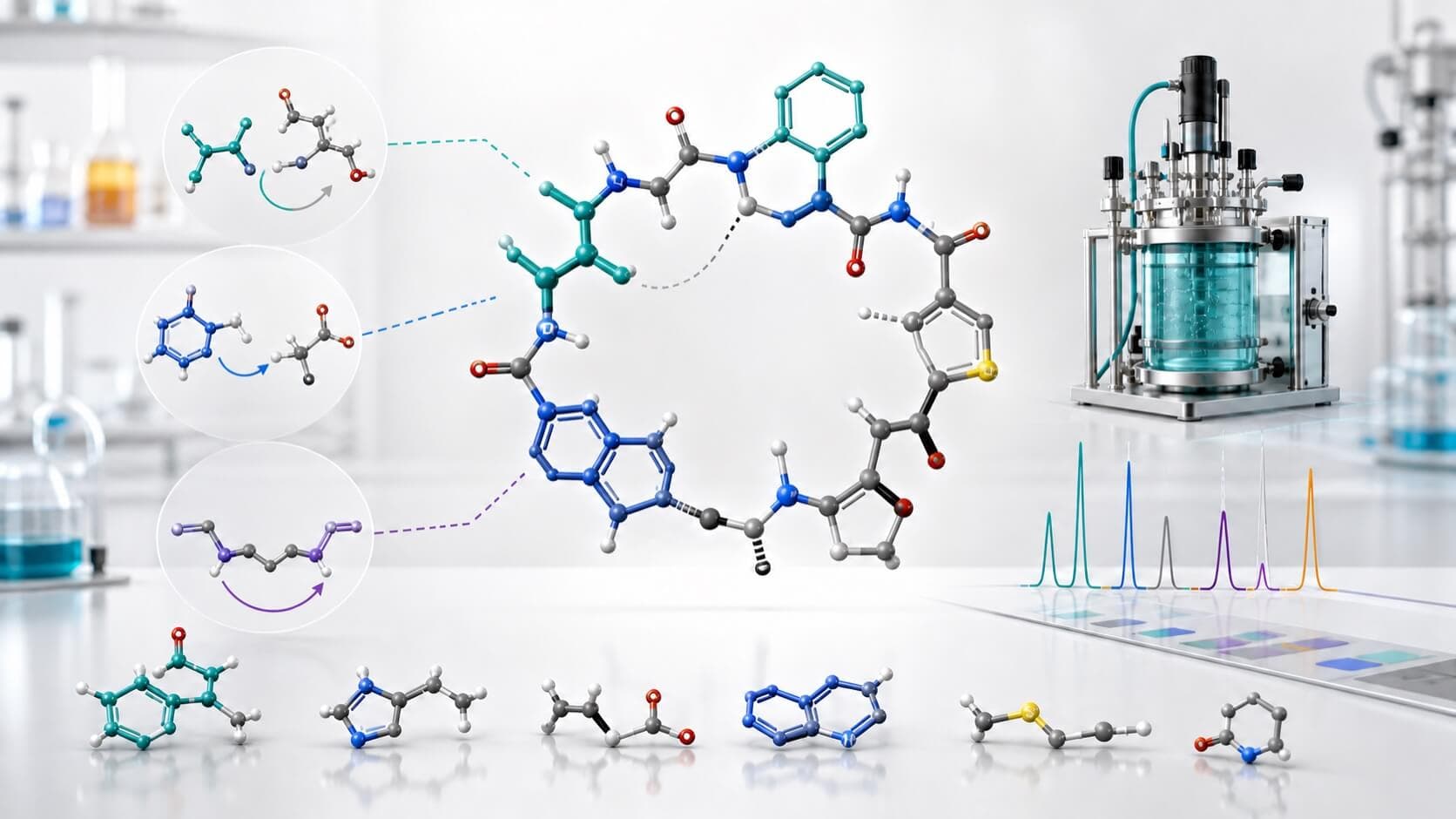
Macrocyclization Is a Route-Design Problem, Not Just a Ring-Closing Step
The useful question is not simply whether cyclization can rigidify a molecule. It is whether the chosen connection preserves the intended binding geometry while creating a route that is selective, reproducible, and expandable across an analogue series. That requires three decisions early in a program. First, the attachment points must place the linker without disrupting essential interactions. Second, the linker must reach those points without imposing excessive strain or introducing unnecessary flexibility. Third, the precursor must carry functional groups and protecting groups compatible with a realistic ring-closing reaction.
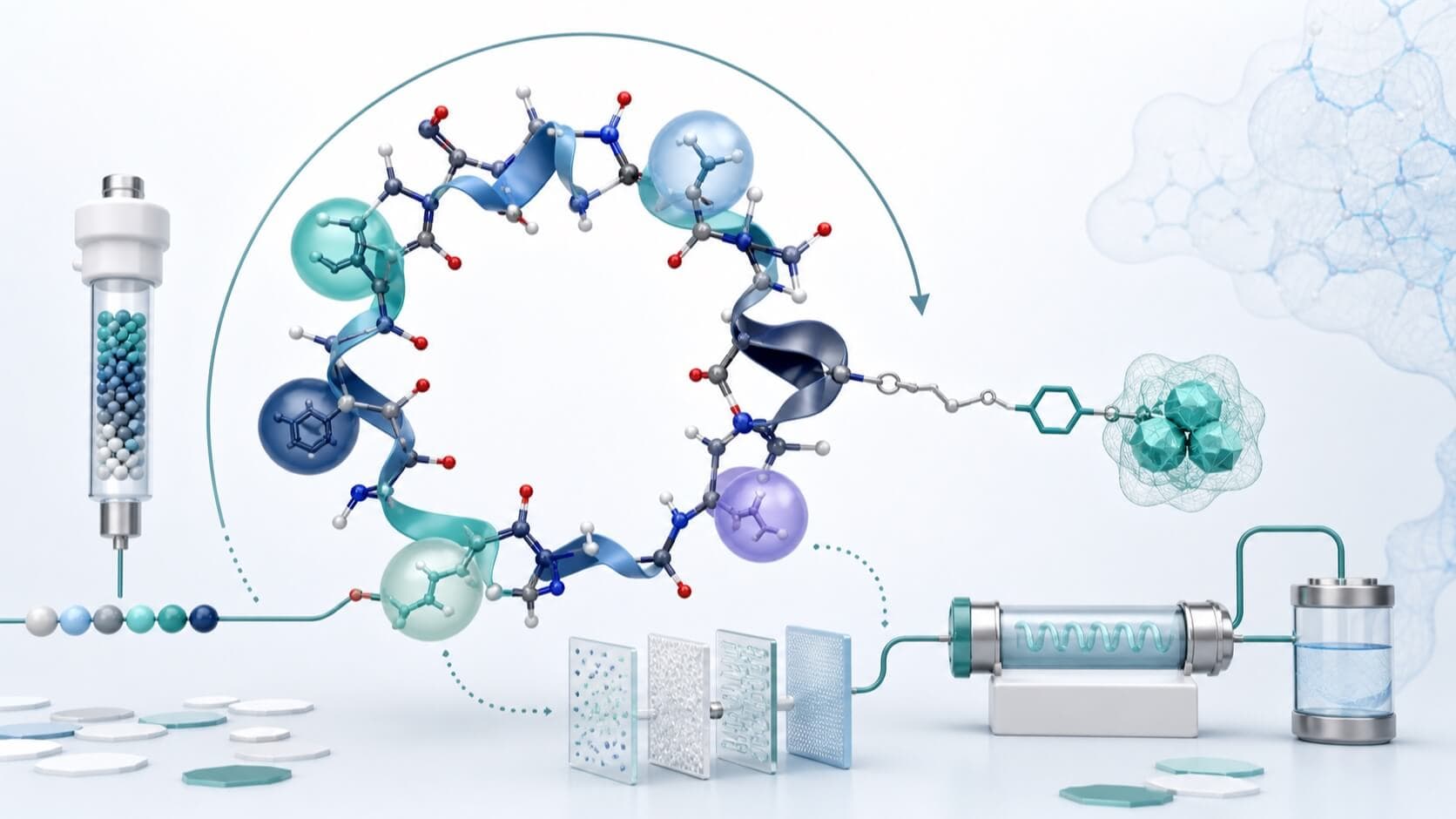
Cyclic Peptides Move from Structural Curiosity to Process-Chemistry Challenge
A 2026 *Journal of Medicinal Chemistry* review maps how cyclic peptides are being designed, screened, and developed across therapeutic programs. Its most useful message for chemistry teams is not that one ring architecture has won. It is that developability depends on coordinated control of monomer choice, cyclization, conformation, conjugation, purification, and formulation. The review, published online on August 13, 2026, defines cyclic peptides as covalently closed amino-acid chains, commonly formed through head-to-tail or side-chain closure. Without free amino and carboxyl termini, these structures can resist exopeptidase cleavage. Yet closure alone does not solve permeability, solubility, clearance, or scalable manufacture.

In Vivo Antibody-ADC Click Reframes Modular Conjugation Design
The reported system uses two bioorthogonal handles. An EGFR-targeting antibody, panitumumab, is modified with trans-cyclooctene (TCO). A HER2-directed ADC, trastuzumab deruxtecan (T-DXd), is modified with tetrazine. The antibody is dosed first, followed 24 hours later by the tetrazine-bearing ADC. The two components are then covalently connected through inverse electron demand Diels-Alder (IEDDA) chemistry.
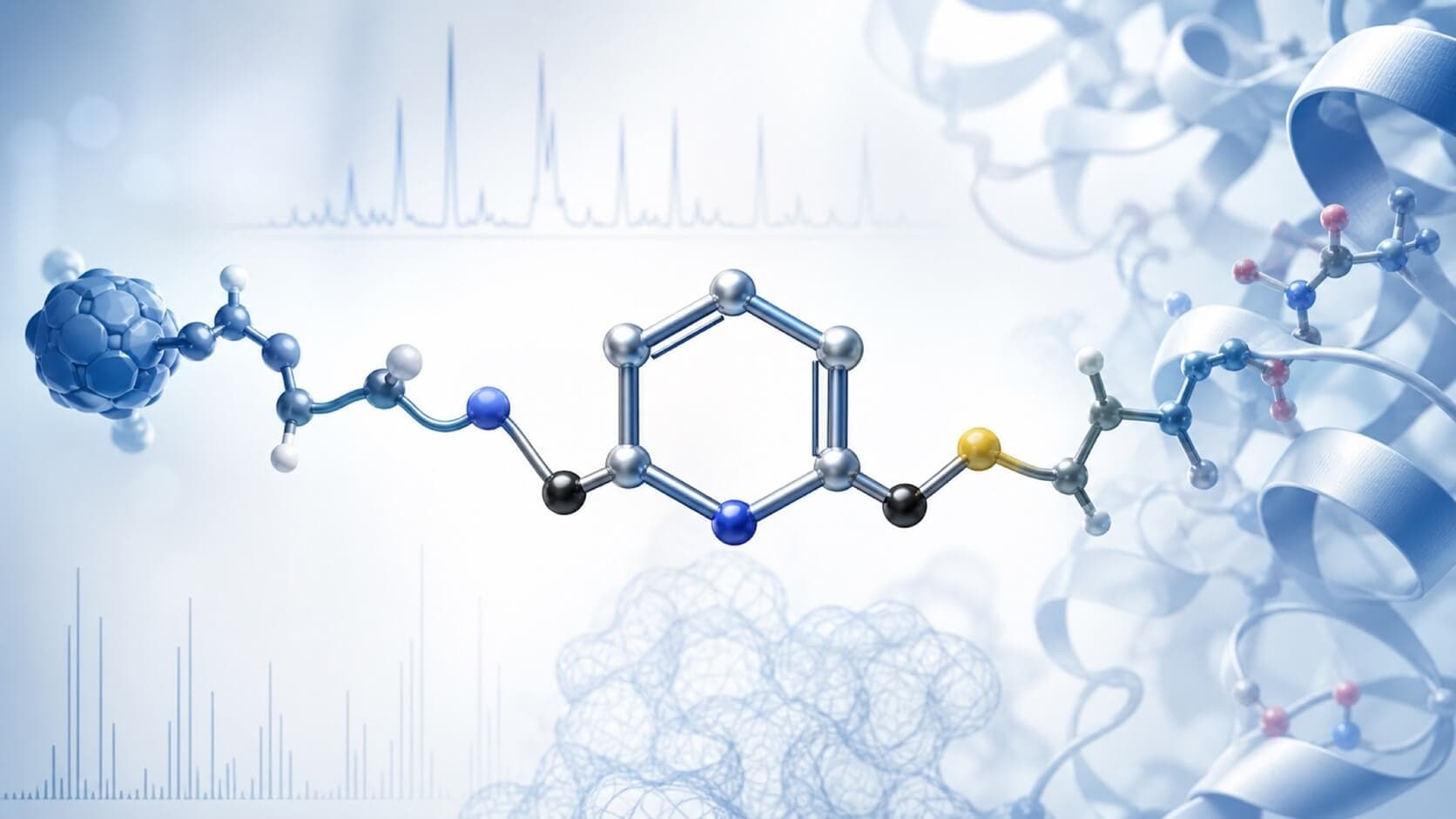
Reported Pyridine Platform for Sequential Amine–Cysteine Conjugation
The platform uses two differentiated leaving groups on one pyridine ring. In the first operation, a primary amine replaces fluorine through nucleophilic aromatic substitution (SNAr), installing an amine-bearing linker, payload, PEG chain, or other functional unit while the thianthrenium group remains in place. In the second operation, a cysteine thiol displaces thianthrenium to create the aryl-sulfur connection.
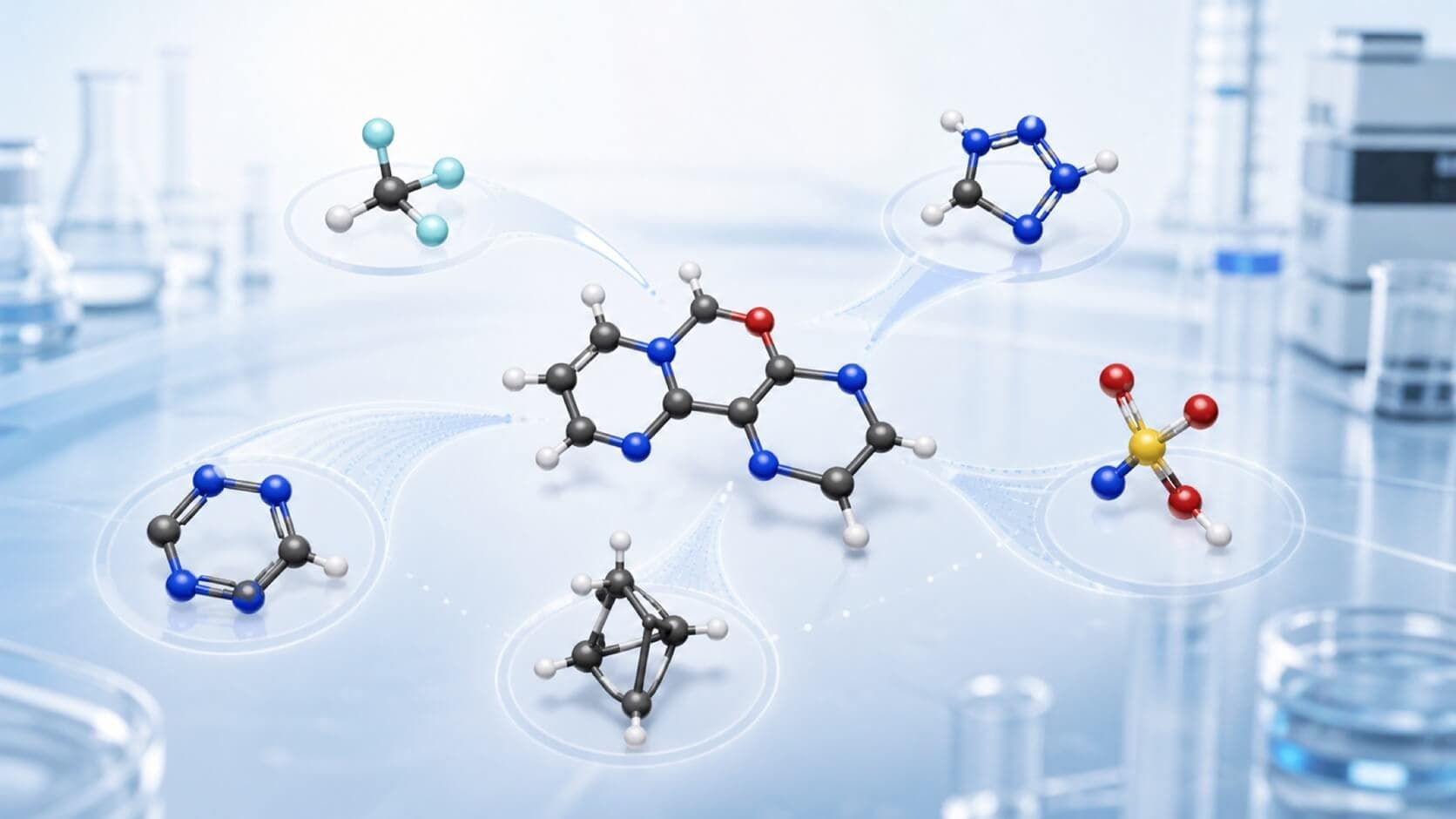
Reported Bioisostere Patterns: From Fragment Swaps to Property Goals
Bioisosteric replacement is most useful when a team begins with a defined liability: an oxidative soft spot, an unsuitable polarity range, a hydrolysis-prone group, an interaction that lacks selectivity, or a ring system that limits accessible chemical space. The reported survey organizes possible responses into single-atom edits, functional-group replacements, aromatic-ring changes, and saturated or bicyclic scaffolds.
ADC Downstream Purification: Match TFF and Chromatography to the Impurity
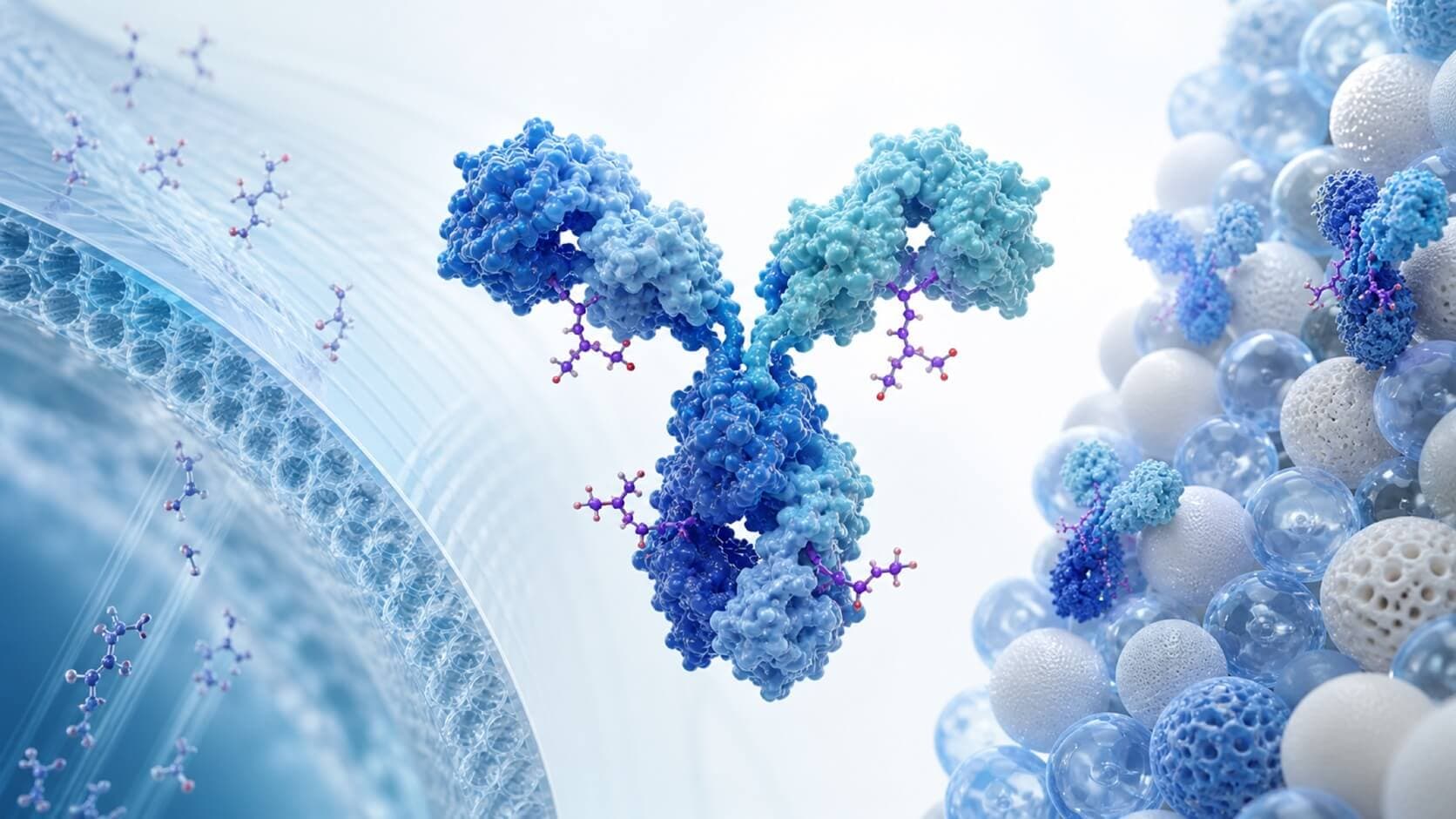
Tangential flow filtration (TFF) can concentrate an ADC, exchange buffer, and remove permeable species such as salts, solvents, quench reagents, and monomeric linker-payload. It cannot provide high-resolution separation among ADC molecules that differ mainly in drug-to-antibody ratio (DAR), surface charge, conformation, or aggregation state. Those species are generally retained together by a membrane selected to retain the antibody.