
行业新闻
关注特色分子砌块、偶联化学、工艺问题和材料选择相关内容
全部新闻
共 59 篇文章

Oligonucleotide Safety Starts With Chemistry and Conjugate Control
Oligonucleotide therapeutics are not one uniform safety problem. Their behavior depends on backbone chemistry, sugar modifications, sequence, conjugation strategy, delivery route, and tissue distribution. That is why FDA clinical pharmacology guidance for oligonucleotide therapeutics calls out immunogenicity risk, hepatic and renal impairment, QTc assessment, and drug-drug interaction considerations as development topics.

Multi-Target GLP-1 Peptides Raise Peptide Process Chemistry Questions
Single-molecule incretin programs have moved from GLP-1-only designs toward dual and triple receptor concepts. For a chemistry team, the useful question is not whether one clinical program will outperform another; it is how added receptor biology changes the molecule that must be assembled, modified, purified, and characterized.
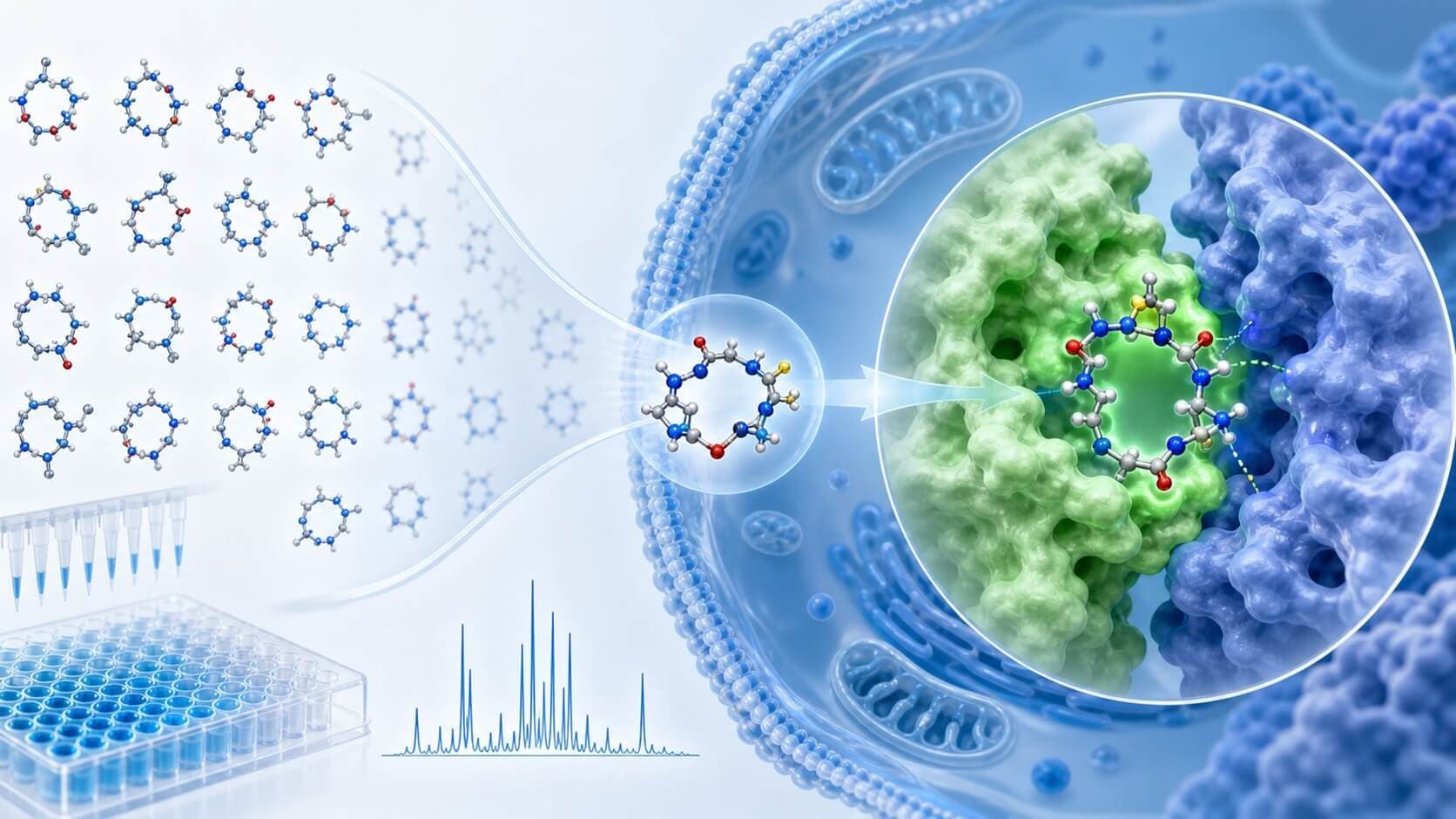
De Novo Cyclic Peptide Screening Creates a Chemistry Path to Intracellular PPIs
The Nature Chemical Biology paper reports a de novo cyclic-peptide screening strategy for intracellular protein-protein interaction targets. The authors screened 15,360 fully random cyclic peptides and identified inhibitors of the Keap1/Nrf2 interaction, then used rapid design-build-test cycles to produce a membrane-permeable compound active in live cells.

Reported NAMPT Inhibitor ADC Reframes Payload Design Around Metabolism
The paper title, "GD2-directed NAMPT inhibition using antibody-drug conjugates in neuroblastoma," supports a narrow evidence boundary: this is a reported preclinical ADC design built around GD2 targeting and NAMPT inhibition. It should not be presented as a clinical-stage therapy, a regulatory-stage asset, or proof that metabolic payloads broadly outperform established ADC payload classes.

Radiopharmaceutical Development Puts Chelator and Supply Chemistry in Focus
A therapeutic radiopharmaceutical normally brings together a targeting vector, a radionuclide, and a linker or chelator system that keeps the radioactive payload associated with the targeting molecule. The targeting vector can be a small molecule, peptide, antibody, antibody fragment, or other binding element. The radionuclide provides the radiation source. The chelator or conjugation chemistry sits between them and has to preserve both radiochemical stability and target-binding behavior.
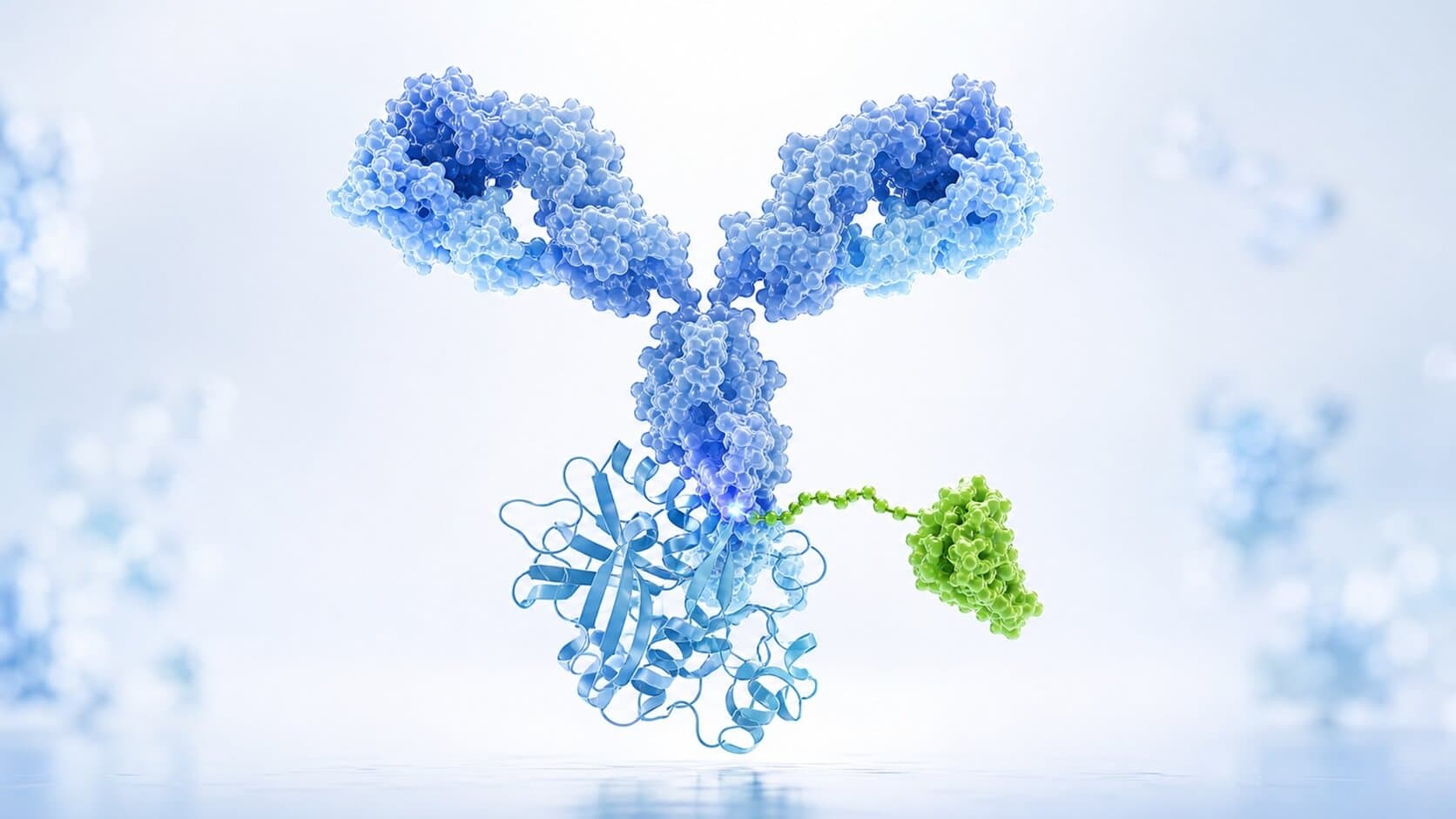
Reported Sortase A Conjugation Platform Improves ADC Uniformity
Traditional ADC conjugation through reduced interchain cysteines or surface lysines produces heterogeneous mixtures. Each batch contains species with different drug-to-antibody ratios, different attachment sites, and potentially different pharmacokinetic profiles. Site-specific enzymatic methods aim to place the payload at a single, defined position on every antibody molecule.