
行业新闻
关注特色分子砌块、偶联化学、工艺问题和材料选择相关内容
全部新闻
共 59 篇文章
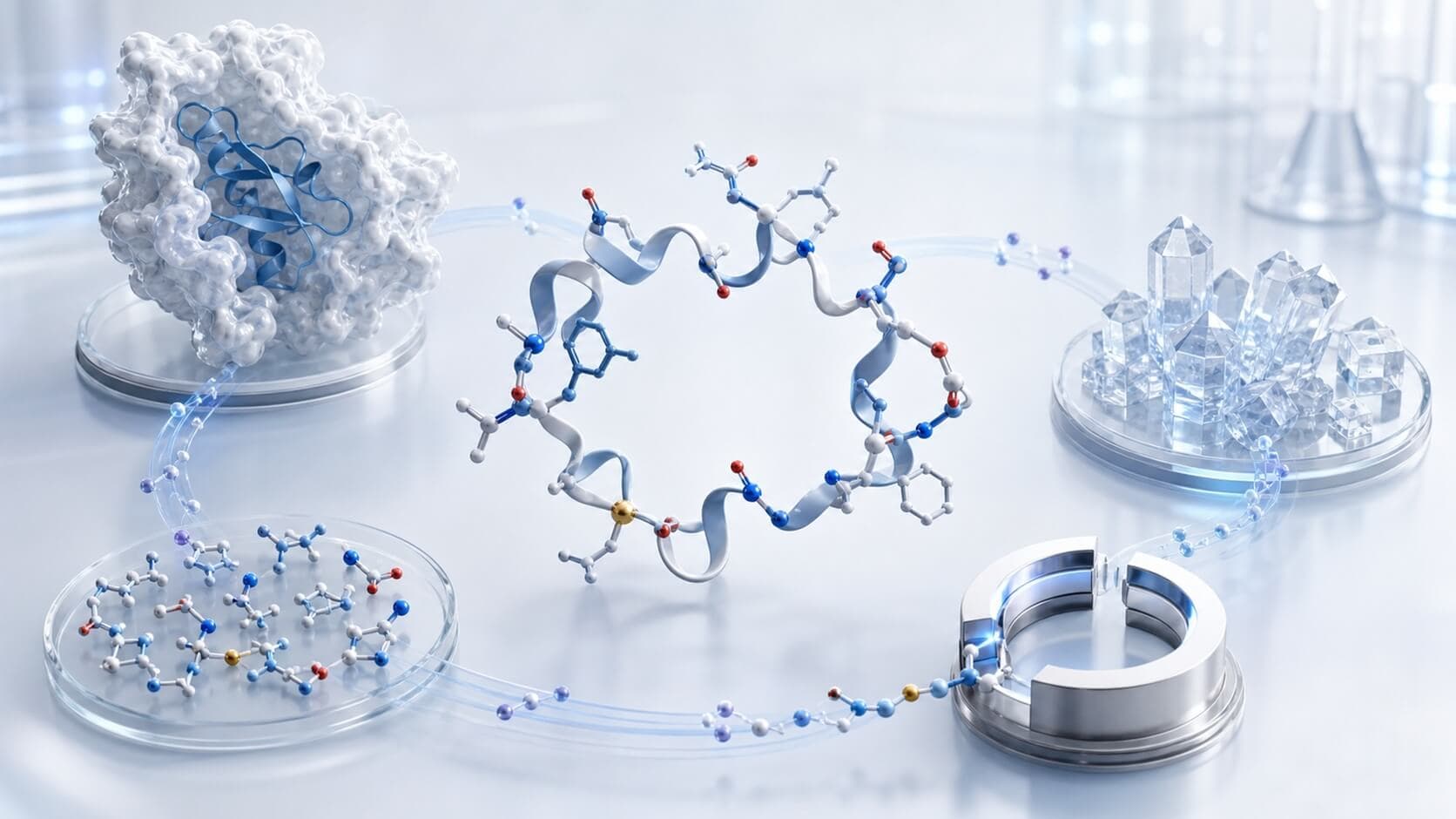
Reported MK-0616 Northern-Fragment Route Redesign: From 37 Steps to 14
The most important boundary in this case is the counting basis. The reported 37-step first-generation sequence and 14-step third-generation sequence refer to a key northern fragment of MK-0616, not to the full molecule. The broader synthesis of enlicitide decanoate is a separate route-level subject, and a full-molecule step count should not be inferred from the fragment comparison.

Reported Gemcitabine-ProTide ADC Expands Payload Chemistry Options
Nucleoside and nucleotide analogs form a major class of anticancer agents, but their phosphorylated active forms carry a negative charge that prevents passive membrane crossing. Conventional small-molecule formulations rely on nucleoside transporters and intracellular phosphorylation — a multi-step process that introduces pharmacokinetic and resistance variables.
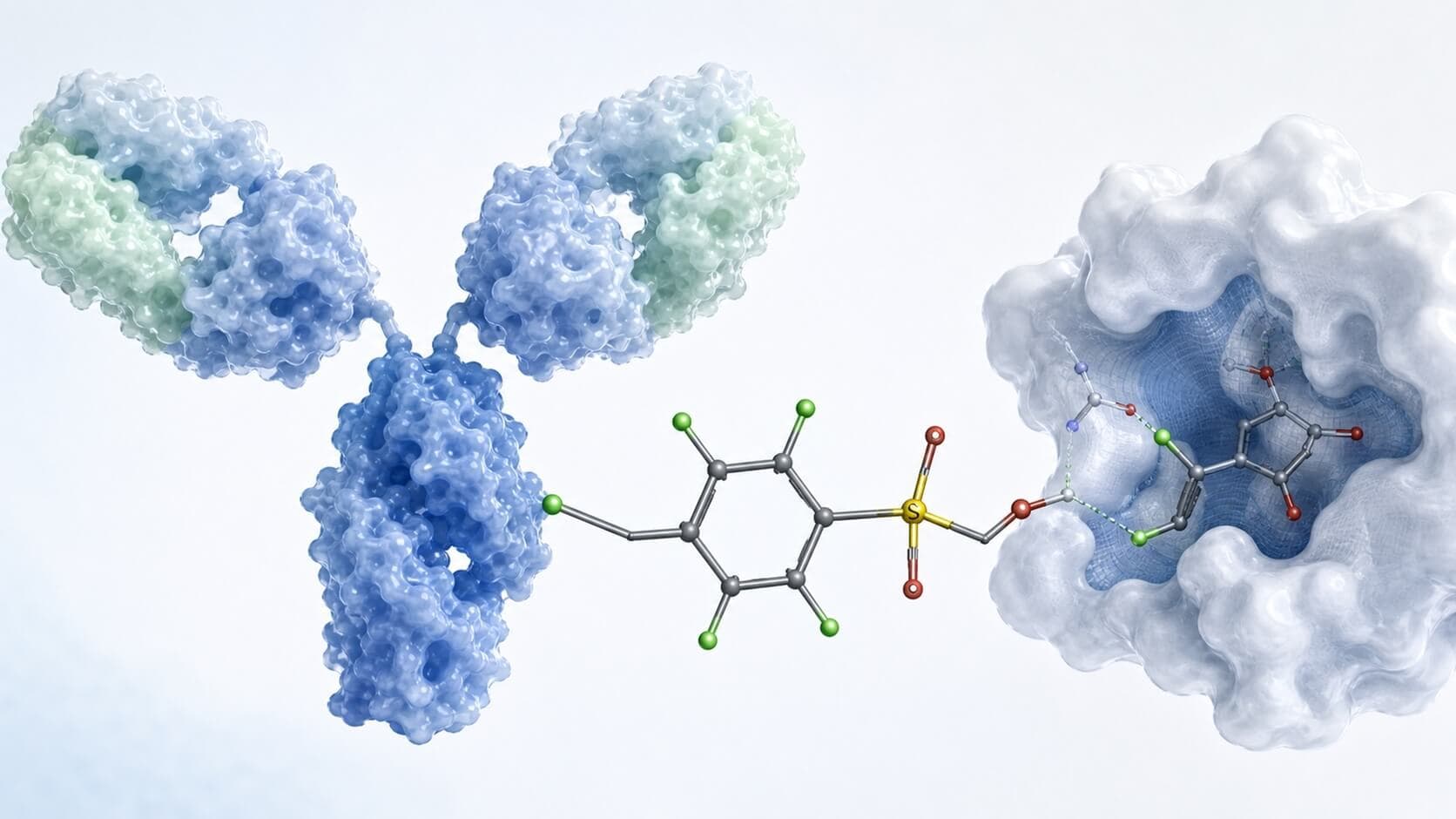
Reported Fluorinated Aryl Sulfate Linker Introduces Alternative ADC Release Trigger
Many established ADCs with cleavable linkers rely on cathepsin B, a lysosomal cysteine protease. The valine-citrulline dipeptide is a canonical substrate, triggering self-immolation of a PAB spacer to release the payload. A single enzymatic trigger creates a single point of potential variability. Tumors with low cathepsin B expression, or ADCs trafficked to compartments with different enzyme profiles, may show reduced payload release. Alternative triggers — glycosidases, legumain, sulfatases — offer orthogonal release mechanisms.

Reported Cortinarin Total Synthesis Highlights Hybrid Peptide Cyclization
The reported route divides a difficult bicyclic peptide target between solid-phase peptide assembly and solution-phase cyclization. That division gives peptide development teams a concrete framework for deciding which transformations belong on resin and which require solution-phase control. The primary Chemical Science paper supports the synthesis-and-characterization framing used here; this article does not rely on an unverified priority claim.

Lipfendra Approval Puts Oral Macrocyclic Peptide Process Design in Focus
FDA announced on July 16, 2026 that Lipfendra (enlicitide) was approved to be used with diet and exercise to reduce LDL-C in adults with high cholesterol or heterozygous familial hypercholesterolemia. FDA also states that Lipfendra is a tablet taken by mouth once daily and is the first oral therapy that blocks PCSK9.

LUNA18 Shows Why N-Alkyl-Rich Cyclic Peptides Need Route-Specific Process Design
The key correction is that the ACS Organic Process Research & Development paper describes LUNA18 (paluratide) through a liquid-phase peptide synthesis process, not a simple SPPS plus three-fragment route. The paper’s abstract says the authors departed from conventional solid-phase peptide synthesis and developed an LPPS process for an N-alkyl-rich cyclic undecapeptide KRAS inhibitor.